The Ultimate Guide to Internal Marine Skimmer in the UK
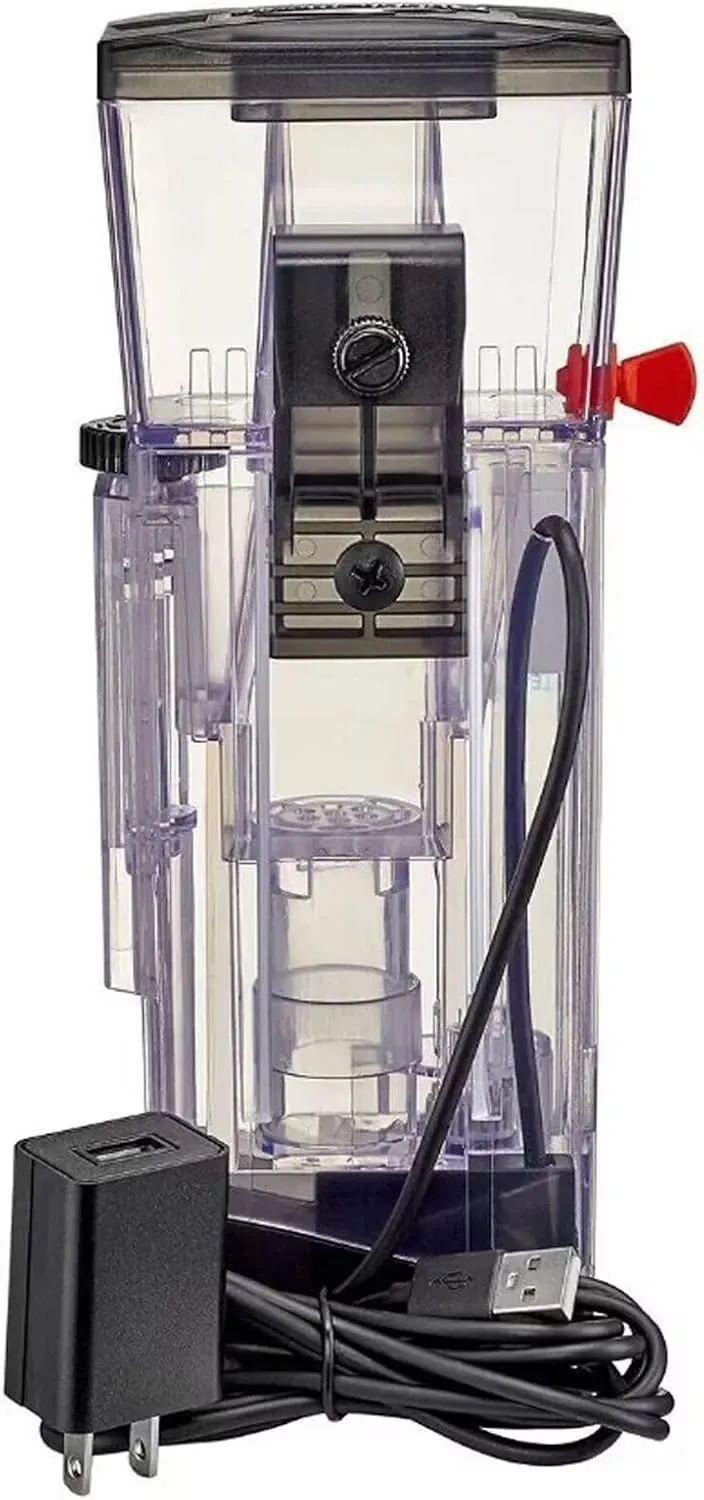
TL;DR: An internal marine skimmer is a compact filtration device that sits directly inside your aquarium or rear sump chamber. It uses a process called foam fractionation to physically remove dissolved organic waste before it degrades into harmful nitrates and phosphates. For UK nano reefs (under 90 litres), it is the most effective way to maintain pristine water quality, heavily oxygenate the tank, and stabilise pH levels.
What exactly is an internal marine skimmer? Put simply, an internal marine skimmer is a vital piece of filtration equipment designed to operate submerged within your aquarium's water column, actively removing dissolved organic waste before it can break down. Maintaining a vibrant, thriving saltwater ecosystem in a compact glass box requires precise biological management. In the confined environment of a nano reef, the margin for error is virtually nonexistent. A single overfeeding event or a small piece of decaying organic matter can send ammonia and nitrate levels surging, threatening the delicate balance of corals and marine fish. Consequently, the most effective line of defence against this rapid degradation of water quality is a highly efficient internal marine skimmer.
For UK aquarists managing smaller setups, space is often at a premium. The average British home size dictates that massive sumps and external filtration systems are frequently impractical. As a result, this reality has driven the immense popularity of All-In-One (AIO) aquariums and nano tanks up to 20 gallons (approximately 90 litres). Within these compact systems, an internal marine skimmer acts as the primary engine for waste export, safely removing dissolved organic compounds.
Furthermore, understanding the fluid dynamics, chemical processes, and proper tuning of these devices separates successful reef keepers from those constantly battling nuisance algae and fluctuating parameters. This comprehensive guide explores the mechanics, selection, and optimisation of internal skimming for small-scale marine aquariums.
Key Takeaways
- An internal marine skimmer removes dissolved organic compounds (DOCs) via foam fractionation before they degrade into nitrates and phosphates.
- Nano reefs (under 20 gallons/90 litres) lack the dilution capacity of larger systems, making active waste export essential for long-term stability.
- Proper tuning requires balancing water level, air intake, and pump flow to achieve the ideal wet or dry skim.
- New skimmers require a 'break-in' period of up to two weeks to shed manufacturing residues and build a beneficial biological slime coat.
- Regular maintenance, including daily cup cleaning and monthly pump descaling, is vital for consistent performance, especially in UK hard water regions.
How Does an Internal Marine Skimmer Work?
To grasp why an internal marine skimmer is so effective, one must look at the underlying physical chemistry of saltwater. The process at work is known as foam fractionation. Unlike mechanical filters that simply trap physical particles, protein skimmers extract waste at a molecular level.
What Do Protein Skimmers Actually Remove?
Dissolved organic compounds (DOCs) in a marine aquarium—stemming from fish waste, uneaten food, and coral mucus—are amphipathic. This means their molecules possess two distinct ends. One end is hydrophilic (water-loving), and the other is hydrophobic (water-repelling). When air bubbles are introduced into the saltwater column inside the skimmer body, these organic molecules naturally align themselves at the air-water interface.
Subsequently, the hydrophobic end pushes into the air bubble to escape the water, while the hydrophilic end remains anchored in the surrounding saltwater. As millions of tiny micro-bubbles rise through the skimmer's reaction chamber, they collect these organic molecules, acting like a highly efficient molecular conveyor belt.
How Do Venturi Valves Produce Micro-Bubbles?
Based on our extensive testing at BubbleMagu, we have found that generating the correct size and volume of bubbles is critical for optimal performance. Modern internal marine skimmers utilise a specialised pump equipped with a needle-wheel impeller and a venturi valve. As water is drawn into the pump, the venturi creates a pressure drop that pulls in atmospheric air. The needle-wheel impeller then rapidly chops this air and water mixture into a dense, milky froth of micro-bubbles.
Moreover, smaller bubbles possess a higher surface-area-to-volume ratio than larger bubbles. This increased surface area provides significantly more space for organic molecules to attach. The mixture is then driven into the reaction chamber, where a carefully engineered baffle system increases the 'contact time'—the duration the bubbles spend in the water before reaching the surface. Ultimately, longer contact time equates to far greater waste extraction.
What is Skimmate and How Often Should I Clean It?
As the bubble column reaches the top of the skimmer neck, the water drains away, leaving behind a concentrated foam of trapped organics. This foam is pushed upward by the continuous generation of new bubbles from below, eventually spilling over into the collection cup. The resulting liquid, commonly referred to as 'skimmate', is highly concentrated, foul-smelling waste that has been permanently removed from the aquarium ecosystem. We recommend emptying and rinsing this cup at least twice a week for maximum efficiency.
Do I Really Need a Skimmer for a Nano Reef Tank?
The fundamental challenge of keeping a small marine aquarium lies in the concept of dilution. In the ocean, or even in a massive 200-gallon display tank, a small amount of waste is instantly diluted by the sheer volume of surrounding water. However, in a 20-gallon system, there is absolutely no such buffer.
Why is Waste Management Harder in 90-Litre Aquariums?
According to UK marine keeping guidelines, managing the biological load in sub-90-litre tanks requires proactive waste export. Aquarists often push the limits of their small systems by stocking them with demanding fish and heavy-feeding corals like LPS (Large Polyp Stony) and NPS (Non-Photosynthetic) varieties. These organisms require frequent feeding, which introduces significant amounts of proteins and phosphates into the water. Without an internal marine skimmer, this heavy organic load relies entirely on biological filtration (live rock and bacteria) to process.
Biological filtration successfully converts ammonia to nitrite, and nitrite to nitrate. However, it does not remove the waste from the system; it merely changes its chemical state. High nitrates and phosphates inevitably lead to aggressive algae outbreaks, cyano-bacteria blooms, and inhibited coral calcification. In contrast, a protein skimmer interrupts this nitrogen cycle by extracting the raw proteins before the bacteria even have a chance to break them down.
"The key to long-term success in nano reefing isn't just reacting to nutrient spikes, but preventing the organic precursors from breaking down in the first place."
Can an Internal Marine Skimmer Improve Aquarium pH?
Beyond waste removal, an internal marine skimmer serves another incredibly vital function: oxygenation. The dense column of micro-bubbles creates massive gas exchange between the aquarium water and the surrounding air. This constant aeration actively drives off excess carbon dioxide (CO2) and heavily oxygenates the water.
In modern UK homes, particularly new builds featuring double glazing and intense insulation, indoor CO2 levels can become quite high. Elevated CO2 in the aquarium water depresses the pH, which can severely stunt coral growth. Fortunately, the vigorous air-water mixing provided by the skimmer helps maintain a stable, elevated pH, mimicking natural seawater conditions much more closely.
For those looking to expand their knowledge on the broader mechanics of these filtration units, reading up on the core principles is highly recommended. Our Saltwater Aquarium Skimmer Explained: A UK Buyer's Guide provides a deep dive into the broader mechanics of these filtration units and how to choose the right one for your specific reef setup.
Ready to try BubbleMagu?
Shop Now — £79.93